

Written by Kevin Hawks
From Radio Waves to FPV Goggles
Have you ever wondered how we reached the point where you can slip on a pair of goggles, fire up a quadcopter, and fly through the sky from a bird’s perspective? Today’s FPV drones are tiny marvels of engineering, but sixty years ago, similar technology would have required an aircraft with a 10-foot wingspan. Back then, it was nearly impossible to combine radio signal reception, aircraft control, and live video transmission into a small system.
So how did we get here? Depending on who you ask, you’ll hear different answers. But the journey of drones, quadcopters, and FPV (First-Person View) flight is one of innovation, military experimentation, and passionate hobbyists.
The First R/C Vehicle: Tesla’s Radio-Controlled Boat
The first remotely controlled vehicle traces back to Nikola Tesla in 1898. He shocked audiences in New York when he demonstrated a radio-controlled boat moving seemingly by magic. Some even thought there was a small monkey inside piloting it.
While far from today’s FPV race drones or long-range 4K camera quads, Tesla’s invention laid the foundation for modern radio-controlled technology.
Military Experiments and the Birth of the “Drone”
R/C aircraft quickly became part of military experimentation.
-
World War I: The British developed the “Aerial Target,” an experimental R/C aircraft designed to deliver explosives. Unfortunately, it crashed too often to be useful.
-
1920: The first quadcopter, the Omnichen No.2, was built in France as an alternative to helicopters.
-
1935: The Royal Air Force created the de Havilland DH82B “Queen Bee,” used as a gunnery training target. Its buzzing sound inspired the term “drone.”
-
1938: Scientists Bill and Walt Good built the first successful R/C model plane, the Big Guff.
At this point, transmitters, receivers, and motors were improving, but television itself was still brand new. FPV flight was a long way off.
The First FPV Aircraft: BQ-7 Aphrodite
In 1944, the US Army Air Forces created the BQ-7 “Aphrodite”, a modified B-17 bomber filled with 20,000 lbs. of explosives. Pilots would take off, arm the controls, then bail out while the plane was flown remotely toward its target.
To improve accuracy, engineers added TV cameras in the cockpit and nose, transmitting video back to the controlling aircraft. This made the BQ-7 the first FPV aircraft, though it was massive—103 ft wingspan, 74 ft long, weighing 63,000 lbs.
Unfortunately, the video quality was poor, accuracy was terrible, and the project was considered a failure.
Why Quadcopters Struggled to Compete
Although the first operational quadcopter was invented in 1920, they weren’t practical during WWII. Helicopters, with their simpler design, became the dominant vertical-lift aircraft.
Quadcopters required precise control of four motors—something impossible without modern flight controllers.
It wasn’t until 1956 that Convertawings developed the Model A, the first commercially viable quadcopter. It was more efficient and stable than helicopters, but military funding cuts kept it from advancing further.
The Hobby Boom: 1960s–1990s
After WWII, hobbyists kept R/C technology alive. From the 1960s through the 1990s, model planes and cars exploded in popularity.
-
Transmitters and motors became smaller and more powerful.
-
Gas engines gave way to electronic motors.
-
Batteries improved, enabling longer flight times.
This era set the stage for FPV hobbyists to emerge.
Carl Berry’s “Project Cyclops”
The first real hobbyist FPV aircraft came in the late 1980s. Former Boeing engineer Carl Berry built “Project Cyclops,” which used bulky security cameras and a 10-ft wingspan plane. By 1993–94, he even built a custom arcade-style cockpit simulator to fly it.
Though heavy and inefficient, it proved that FPV flight was possible outside of the military.
Predator Drone and the Rise of Modern FPV
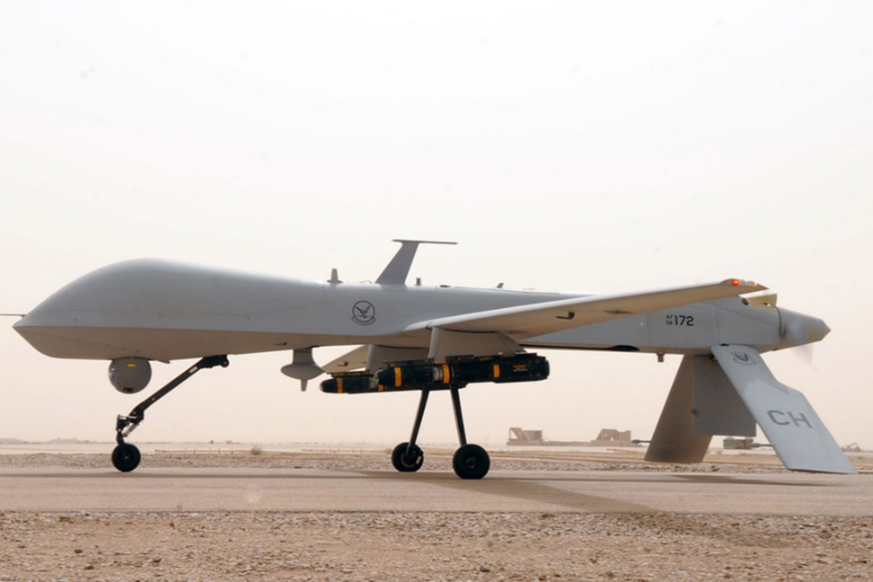
In 1996, the MQ-1 Predator drone revolutionized FPV technology. Using satellites and GPS, it allowed pilots to control the aircraft from across the world with only seconds of video delay. This was the first large-scale, reliable FPV system—though it cost millions of dollars.
At the same time, hobbyists experimented with attaching baby monitors, security cameras, and camcorders to their R/C planes.
DJI, GetFPV, and the FPV Revolution
The 2000s and 2010s saw FPV explode:
-
2005: YouTube made sharing FPV videos easy.
-
2006: DJI was founded and later secured the first FAA commercial drone permit.
-
2012: Tim Nilson launched GetFPV.com and Lumenier, making drone gear accessible to the public.
-
2013: DJI released the Phantom, a game-changer for aerial photography.
-
2014–2015: The first official drone races began, with leagues like MultiGP and the Drone Racing League (DRL).
-
2016–2019: DJI released iconic drones like the Mavic Pro and Mavic Mini, cementing consumer drone popularity.
Drone Racing and FPV Today
Drone racing has continued to grow, from sanctioned leagues to grassroots groups like Street League Spec Drone Racing.
Racing quads still rely on analog video for ultra-low latency, but digital FPV systems are rapidly improving, offering HD video and smooth transmission.
Today, drones are used for:
-
Aerial photography and videography
-
Racing and freestyle tricks
-
Commercial inspections and mapping
-
Search and rescue
-
Recreational fun
The Future of FPV
In just 130 years, we’ve gone from Tesla’s tiny boat to palm-sized drones capable of broadcasting HD video in real-time. FPV has grown from secret military projects to a global hobby and professional industry.
The future promises even smaller, faster, and smarter drones. Whether for racing, photography, or exploration, FPV flight represents freedom once reserved only for birds.
Who knows what the next 130 years will bring? Keep flying!